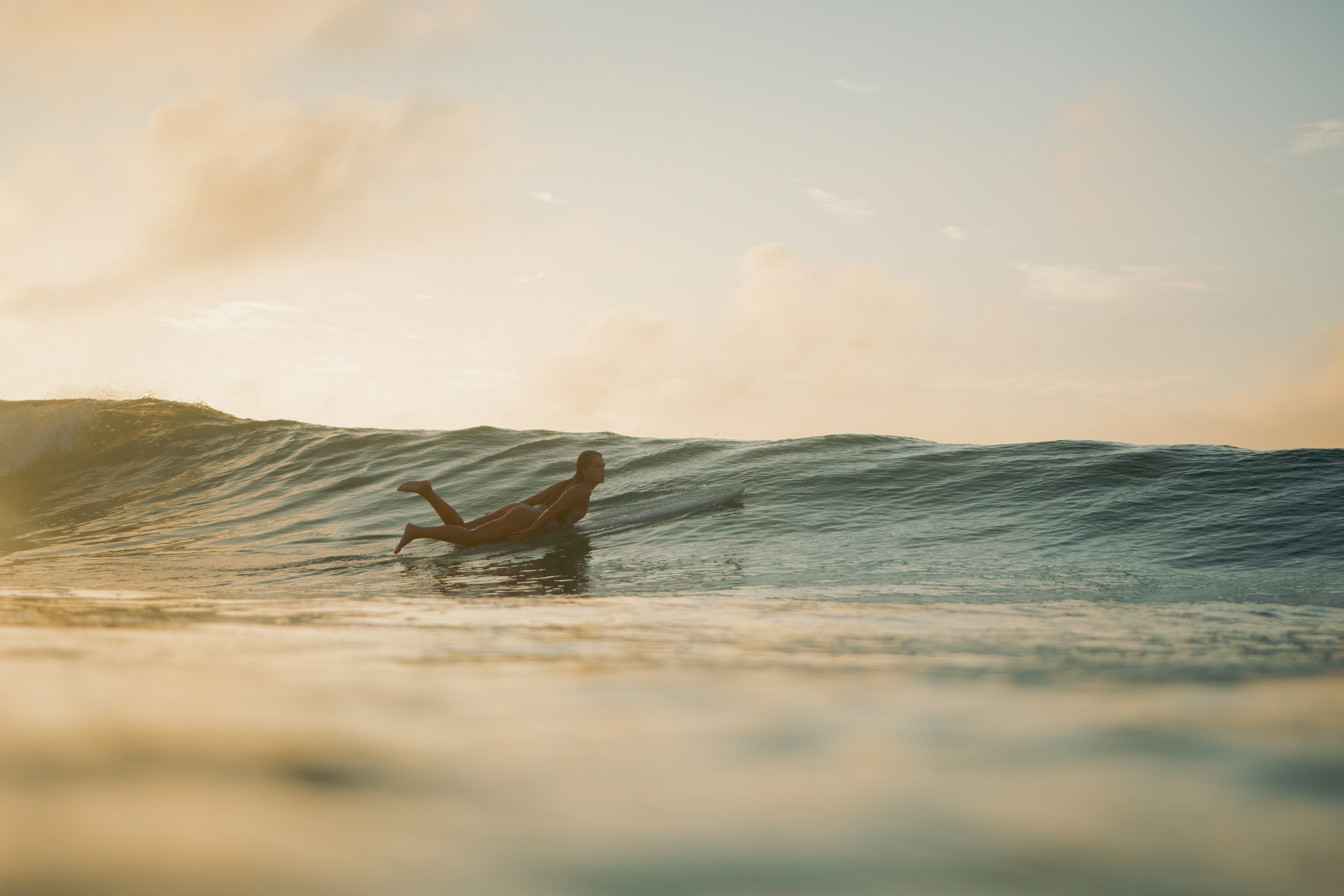
Women's surfing in Portugal is in a golden decade. Yolanda Hopkins a two-time Olympian, at Tokyo and Paris 2024. Teresa Bonvalot on the Championship Tour. Carolina Mendes commentating world events. Joana Schenker bodyboard world champion. But what matters most is underneath: dozens of schools in Portugal training women to surf, from zero to competitive.
Why Portugal is special
In many countries, surf is still a closed club. In Portugal, it isn't. Beaches are open, schools have mixed classes by default, and most schools have female instructors on the team. It's not a quota — it's normal. For those arriving at their first lesson nervous about "being the only woman", reality is usually half the class.
What distinguishes a good school
— Female instructors on the team — not mandatory, but makes a difference for many students, especially in the first lesson
— Women-only lessons (some schools offer) — for those who prefer an exclusive environment in the first weeks
— Suits and boards adapted — biomechanics matters: lighter boards, suits with cuts thought for female bodies
— Inclusive language — nothing about "you'll look pretty surfing". Professional instructors teach technique, not gender.
Favourite spots
— Carcavelos — calm wave, flat sand, easy access, strong female community
— Costa da Caparica — multiple spots, good ratios, schools competing on quality
— Ericeira — quality waves, schools with history, local atmosphere
— Matosinhos — urban, accessible, schools at full capacity in summer
Start slow, go far
Surf is a sport that rewards consistency over strength. Technical detail always beats brute effort. The first lesson is just the start — what happens in the second, the fifth, the twentieth is what defines whether you'll surf your whole life or whether it was just an experience.
Book your lesson
On Surf Booking you can see every certified school in Portugal. Filter by zone, see the day's conditions, and book online. Some schools offer special packs for groups of women — ask the school.