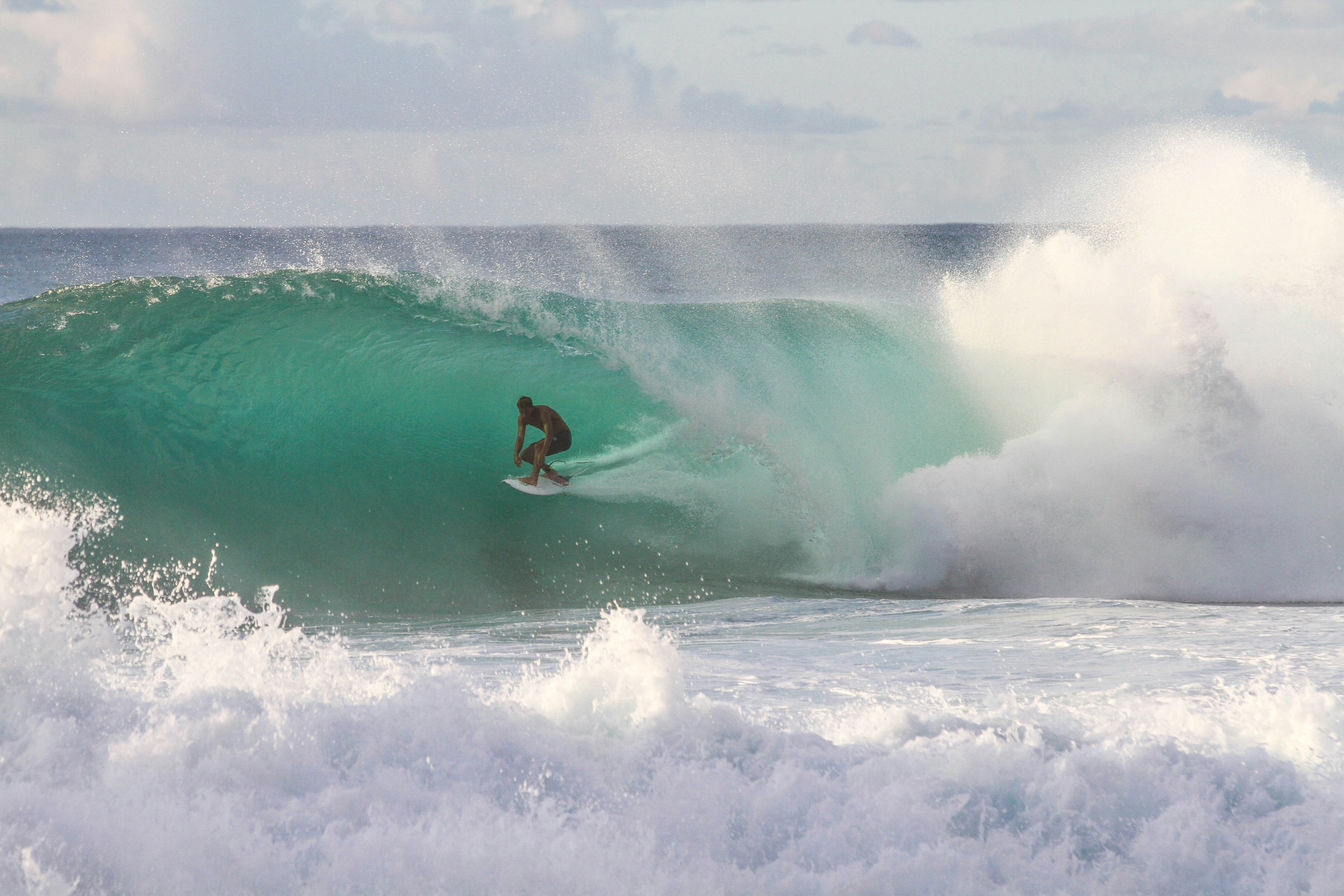
When you hear "Supertubos crushes everyone but Matadouro is forgiving", the difference is literally on the sea floor. Understanding the wave type at each spot saves you wipeouts and helps you progress faster.
Beach break — sandy bottom
The wave breaks over sand. The most common type in Portugal — Matosinhos, Costa da Caparica, Foz do Lizandro, Cortegaça. The bottom shifts with each tide and swell, so the peak is rarely in exactly the same place two days running.
Pros: forgiving waves, fall onto sand (no rock bottom), multiple peaks distributing surfers, ideal to learn.
Cons: less consistency, rip currents on big swell, can close out when waves get fat.
Where to find: 90% of PT beaches are beach break. Learn here before any other bottom.
Reef break — rocky bottom
The wave breaks over submerged rock. Pedra Branca, Coxos, parts of Ribeira d'Ilhas. The bottom is fixed, so the wave ALWAYS breaks in the same place with the same shape — high consistency, zero margin for error.
Pros: predictable waves (same starting line every day), clean barrels, technical quality.
Cons: dangerous wipeouts (shallow rock bottom), needs experienced wave-reading, protective local community.
When to step in: only after consistent surf at beach breaks, with an instructor who knows the peak, on the right tide and swell. Never learn on reef.
Point break — peak at the point
The wave breaks along a point of land (rock or sand), offering long walls in one direction. The classic point breaks — Jeffreys Bay, Mundaka. In PT they're rarer but Ribeira d'Ilhas has point characteristics.
Pros: long waves (15-30+ seconds of riding), chained manoeuvres, technical quality.
Cons: crowded (a long wave draws everyone), strict priority, technical entry and exit.
When to step in: with solid intermediate base. In PT, Ribeira d'Ilhas is the test — long right, mixed bottom, lineup with strict etiquette.
River mouth
Wave at a river outlet. Sediment pushed by fresh water forms a consistent sandbank — quality waves almost reef-like but over sand. Foz do Lizandro, Amoreira (Aljezur), Bordeira are examples.
Pros: best of both worlds — point consistency with forgiving beach bottom.
Cons: river current (mind big swells), can get mushy on small swell.
How to know your spot's type
Each spot page on SurfBooking shows the bottom type (sand / rock / mixed) and best tide. Before booking, open the spot and check. If in doubt, ask the school — they'll tell you clearly if the peak is for beginners or not.