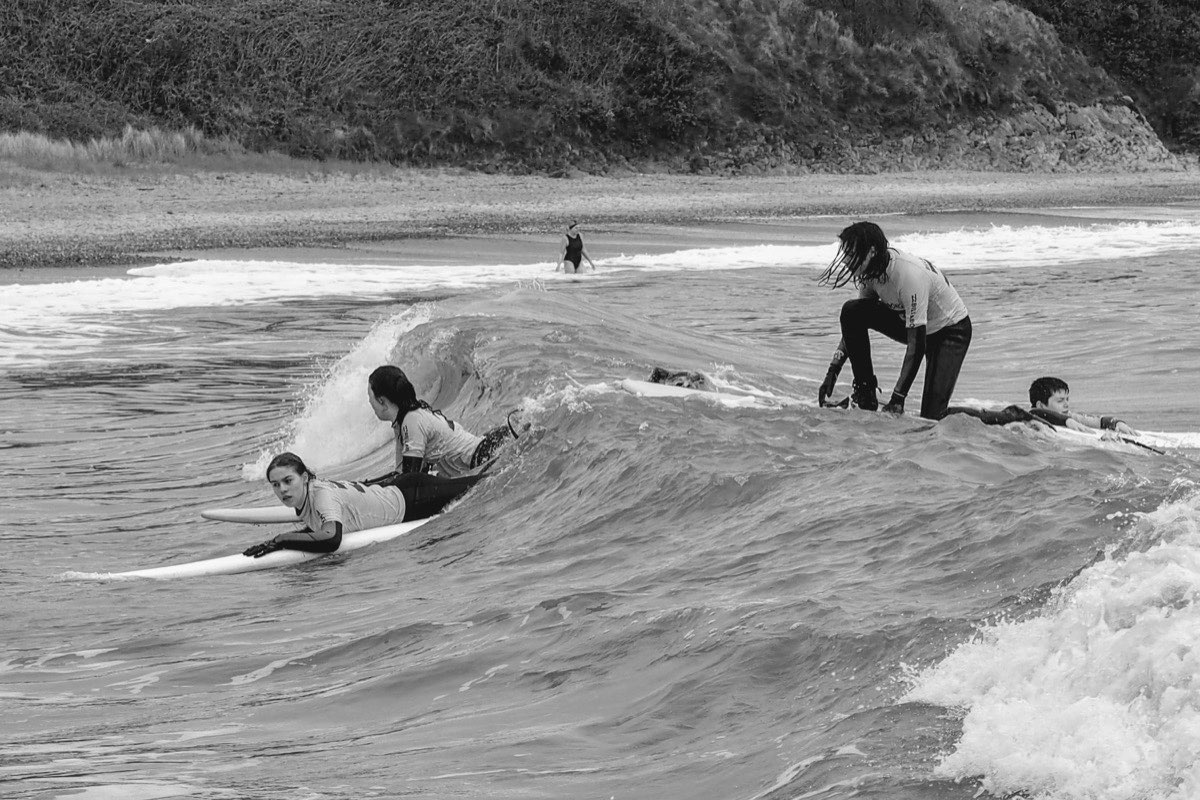
You're about to take your first lesson. You're probably somewhere between excited and nervous. Both are normal. Here's what's actually going to happen — no marketing fluff.
1. The wetsuit will feel strange
Tight, cold for the first 30 seconds, and the feeling that you're breathing less. Normal. The suit warms up in 60 seconds from your body heat, and the "tightness" is what keeps you warm in the water. If it's loose, ask for another — don't be embarrassed.
2. The dry-land briefing is the most important part
Before you go in, the instructor will talk safety: where the currents are, how to fall, what to do if the board hits. Then comes the pop-up — getting to your feet on the board. You do it on land first, dozens of times. Sounds silly. It isn't. Your body needs that muscle memory before the water.
3. The first wave — it's not epic
Most first waves are in whitewater, on a big foam board, with the instructor pushing you. You'll fall. A lot. Anyone who tells you "I stood up first time" is either lying or got blind lucky. The realistic average: standing up on a wave in your first lesson is a win.
4. The exhaustion is real
A 90-minute lesson sounds short at first. At 45 minutes your arms are screaming. Paddling is the most underrated exercise on the planet — you use deltoids, back and core at the same time. That's why you sleep so well that night.
5. What to bring (and what not)
— Bring: swimsuit, towel, water, water-resistant sunscreen, sandals.
— Don't bring: jewellery, phone for the water (the school keeps it in the car), expectations of a technical surf lesson — the first lesson is about feeling the sea.
Board, wetsuit, leash — the school provides everything. Don't buy anything before your first lesson. Check average prices in Portugal before booking.
6. How to know if the school is good
SurfBooking ratios (1 instructor per 6 beginners), certified instructors, suit/board included, and — above all — a school that adapts the spot to the day. The certified schools on Surf Booking meet all these rules.